A dream-science film studio
We map the dreams almost everyone has.
Forty-second films about falling, being chased and losing your teeth, and what published research actually found about each one. No dream dictionaries. Every number has a source.
The atlas
Common dreams, plate by plate
Each plate is a film and a page: how common the dream is, what researchers found, and which ideas are only theories.
 73.8 %of students said they'd dreamed of falling
Dreaming of falling
About 3 in 4 students in a large survey said they'd dreamed of falling. What researchers found about falling dreams, with sources — no dream dictionary.
 81.5 %said they'd been chased: the top dream of 55
Dreaming of being chased
Being chased topped a list of 55 typical dreams: about 4 in 5 students said they'd had it. What research found, with sources.
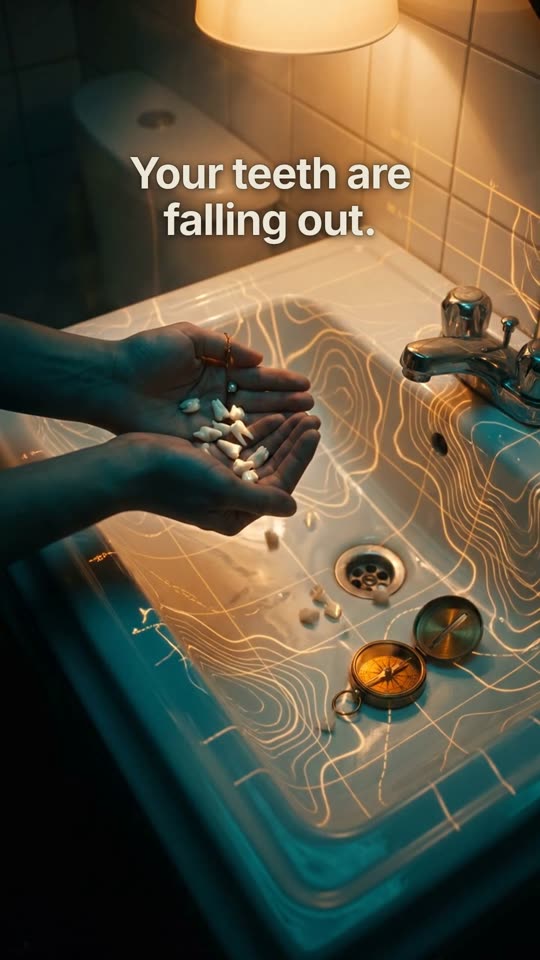 18.8 %said they'd dreamed of losing their teeth
Dreams about teeth falling out
A study tested what teeth-falling-out dreams go with: tension in the teeth and jaw on waking, not psychological distress. Sources inside.
 67.1 %said they'd dreamed of school or studying
Dreaming about exams and school
Two in three students said they'd dreamed of school, and almost half of failing an exam. What research found, with sources.
 58 %of grieving caregivers dreamed of the person they lost
Dreaming of someone who has died
More than half of grieving caregivers in one survey dreamed of the person they lost, and many said it affected their grieving. Sources inside.
 48.3 %said they'd flown in a dream
Dreaming of flying
Nearly half of students said they'd flown in a dream, men more often than women. What research found about flying dreams, with sources.
 59.5 %said they'd dreamed of arriving too late
Dreaming of being late
About 6 in 10 students said they'd dreamed of arriving too late, like missing a train. What research found, with sources.
 55 %have had at least one lucid dream
Lucid dreams
A meta-analysis of 50 years of research estimated that 55 % of people have had a lucid dream. What the studies found, with sources.
 32.6 %said they'd dreamed of being naked
Dreaming of being naked
About 1 in 3 students said they'd dreamed of being naked, and almost as many of being dressed all wrong. What research found, with sources.
 19.2 %said they'd dreamed of not finding a toilet
Dreaming you can't find a toilet
About 1 in 5 students said they'd dreamed of not finding a toilet, women more often than men. What research found, with sources.
35 %of 11-year-olds had one in the past year Dream atlasRecurring dreams
Most recurring dreams are unpleasant, and studies link them to stress and lower well-being. What research found, with sources.
22 dogswhose sleep EEG resembled ours Dream atlasDo animals dream?
Dogs, cats and rats have REM sleep, and rats' brains replay the day during it. What research found about animal dreams, with sources.
16 %of students dreamed of an ex within two weeks Dream atlasDreaming about your ex
Dreams about an ex are common, even years after a breakup, and more often negative than partner dreams. What research found.
21 % vs 7 %frequent nightmares, late pregnancy vs not pregnant Dream atlasPregnancy dreams
Pregnant women dream more of babies and birth, and late pregnancy brings more bad dreams. What research found, with sources.
65 %of dream reports reflected recent waking life Dream atlasWhy do we dream?
Nobody knows for sure why we dream. The main theories, what the evidence says about each, and what the numbers show, with sources.
4 in 5in one online survey had dreamed while feverish Dream atlasFever dreams
Fever dreams are rated more bizarre and more negative than ordinary dreams, and more often about heat and health. What research found.
22 %of students said they'd dreamed of snakes Dream atlasDreaming of snakes
About 1 in 5 students say they've dreamed of snakes, more often women. What research found about snake dreams, with sources.
33.8 %of students had dreamed of insects or spiders Dream atlasDreaming of spiders
A third of students say they've dreamed of insects or spiders, more often women and younger students. What research found.
52 %of dream characters are people we know Dream atlasDreaming about someone
We mostly dream of people we know, especially those we're close to or in conflict with. What research found, with sources.
4–10 %of people have nightmares weekly Dream atlasNightmares
Weekly nightmares affect about 4–10 % of people, more often women. What they go with, and the treatment studied, with sources.
How a film is made
From a study to forty seconds
Find the study
We start from a published paper and log every number we will say, with the sample it came from and its caveats.
Write the dream
About a hundred words: the dream, the number, the finding, and any theory clearly labelled as a theory.
Build the scene
Cinematic stills and short motion shots in one consistent look, checked frame by frame before anything moves.
Check and publish
An automatic critic, then our own final review. Then YouTube and Instagram, with the AI label on.
Our rules
What we promise
Sourced numbers
Every figure on screen comes from a study that is named on screen and listed in full in the description.
Theories labelled
Freud, Jung or threat simulation are presented as ideas to consider, never as findings.
No dream meanings
We don't tell you what your dream means or predicts. Research doesn't support dream dictionaries.
Openly AI-made
Our visuals and narration are made with AI tools and labelled as AI on every platform.
Watch
A new dream on our channels
We publish our own films to our own channels with a small private tool that uses the YouTube API Services and reads our own channel statistics. It is not offered to anyone else. See the privacy policy and the terms.